
Sarjapur Outer Ring Rd, Opp. Intel, Bengaluru, Karnataka 560103

Square Jaw Surgery

Square Jaw Surgery in Bangalore | Dr. Rajendra Gujjalanavar

What Is Square Jaw Surgery?

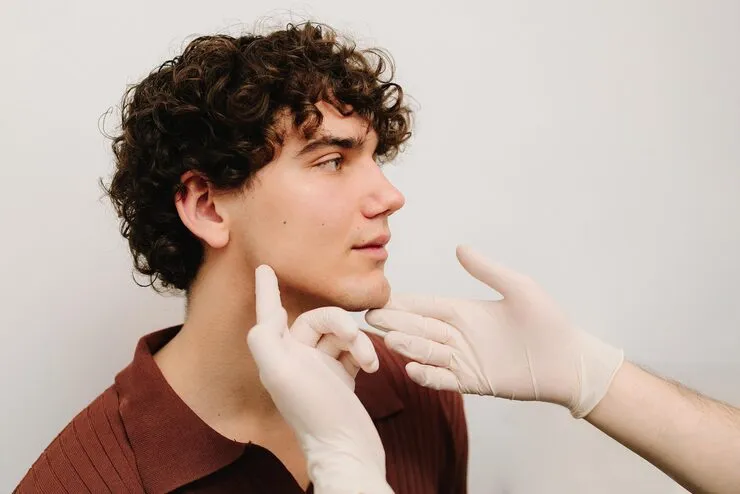
Square Jaw Surgery, also called jaw angle reduction or mandibular angle resection, is a procedure that surgically removes or reshapes the protruding corner of the lower jaw (mandibular angle) to soften the squarish jaw profile. It transforms a broad, angular jawline into a smoother, slimmer, and more aesthetically balanced facial outline.

Causes of a Square Jaw

A square jaw shape can result from:

Hypertrophy (overdevelopment) of the masseter muscle

Overdevelopment or protrusion of the mandibular bone angle

A combination of both bone and muscle prominence

Genetic facial structure

Dr. Rajendra conducts a thorough assessment — including 3D CT imaging when necessary — to determine whether the squareness is bone-based, muscle-based, or both, and designs the most appropriate treatment plan.

Square Jaw Surgery Techniques at De Aesthetikos

Mandibular Angle Resection (Bone)

Surgical removal of the prominent jaw angle bone through intraoral incisions. Best for bone-dominant square jaw.

Masseter Botox Reduction (Non-Surgical)

Botulinum toxin injections to relax and reduce the masseter muscle bulk. Best for muscle-dominant square jaw, with results lasting 6–12 months.

Combined Bone + Masseter Approach

Surgical jaw angle resection combined with masseter reduction for patients with both bone and muscle hypertrophy.

Long Curved Osteotomy

A smooth, curved bone cut along the entire lower jaw for a flowing, natural jaw contour without an abrupt angle change.

Benefits of Square Jaw Surgery

Permanent reduction in jaw width

Softer, more oval or tapered lower face

Enhanced facial harmony — balances the cheeks and forehead

No external scars (intraoral approach)

Frequently combined with V-line surgery for complete lower face contouring

Square Jaw Surgery Recovery Guide

Week 1–2: Swelling and bruising are expected. Soft diet required. Avoid strenuous activity. Week 3–4: Significant reduction in swelling. Light activities resume. Week 6–8: Most patients return to full activity. Jaw contour visibly slimmer. Month 3–6: Final results fully apparent as all residual swelling resolves.

Frequently Asked Questions

What is square jaw surgery? Plus Minus

Square jaw surgery is a procedure that reduces or reshapes the bony mandibular angle at the back of the jaw to soften a wide, square jawline into a slimmer, more rounded or tapered silhouette.

Is square jaw surgery permanent? Plus Minus

Yes. Bone reduction surgery provides permanent results. The jaw angle does not regenerate, so the slimmer contour is lasting.

What causes a square jaw? Plus Minus

A square jaw can be caused by a prominent mandibular bone angle, overdeveloped masseter muscles, or a combination of both. Dr. Rajendra assesses each patient individually to determine the cause.

Can square jaw be corrected without surgery? Plus Minus

Masseter Botox can reduce jaw width caused by muscle hypertrophy and provides results for 6–12 months. For bone-dominant square jaws, surgical reduction is the only permanent solution.

How long does square jaw surgery take? Plus Minus

The procedure typically takes 1.5 to 2 hours under general anaesthesia.

What is the cost of square jaw surgery in Bangalore? Plus Minus

Costs vary based on the complexity of the procedure and whether it is combined with other surgeries. Please contact De Aesthetikos at +91 79969 91939 for a personalised quote.

Can square jaw surgery be combined with chin surgery? Plus Minus

Yes. Square jaw surgery is frequently combined with chin contouring (genioplasty) as part of a complete V-line procedure for a comprehensive lower-face transformation.

Will there be visible scars after square jaw surgery? Plus Minus

No. Dr. Rajendra uses intraoral incisions (inside the mouth), so there are no external visible scars on the face or neck.

Call Now Button