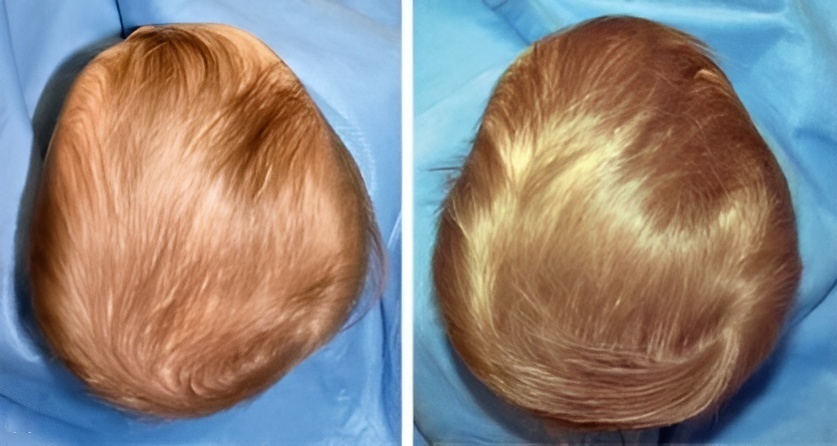
Key Features of Apert Syndrome
Craniosynostosis
- Premature fusion of the coronal sutures leads to a short, tall, and broad skull (turribrachycephaly).
- Prominent or bulging forehead
- Midface hypoplasia (underdeveloped midface)
It is one of the least common types of craniosynostosis, but it often requires surgical correction to avoid lasting deformity.
Syndactyly (Fused Fingers/Toes)
- Varying degrees of fusion between fingers and toes
- “Mitten-hand” appearance due to fusion of bones and soft tissue
- May require surgical separation for function
Diagnosis
Apert Syndrome is diagnosed based on :
- Physical examination
- Imaging (CT/MRI) to assess skull and limb fusion
- Genetic testing to confirm FGFR2 mutation
Prenatal diagnosis is possible through advanced ultrasound or genetic testing if there’s family history.
Facial & Dental Abnormalities
- Shallow eye sockets (can lead to bulging eyes)
- Underdeveloped jaw and crowded teeth
- Cleft palate (in some cases)
Developmental Concerns
- Some children may have mild to moderate intellectual disabilities
- Delays in speech and motor development
- May require physical, speech, or occupational Therapy
Other Complications
- Hearing loss due to frequent ear infections
- Breathing or sleep issues due to midface anatomy
- Vision problems
- Possible heart or gastrointestinal anomalies
Treatment depends on the Type and Severity
Apert Syndrome requires multidisciplinary care, including specialists in craniofacial surgery, hand surgery, ENT, pediatrics, orthodontics, and genetics.
Cranial Vault Remodeling Surgery
Performed in infancy (usually 6–12 months) to relieve pressure, allow brain growth, and improve head shape.
Prognosis
With early diagnosis and coordinated care, many children with Apert Syndrome can lead fulfilling lives. While lifelong medical support may be needed, surgical and therapeutic interventions significantly improve quality of life, function, and appearance.
Why Choose Us
for Apert Syndrome Care?
- Experienced craniofacial and pediatric surgical team
- Expert hand and limb surgeons
- In-house dental, orthodontic, and speech specialists
- Comprehensive genetic counseling and support