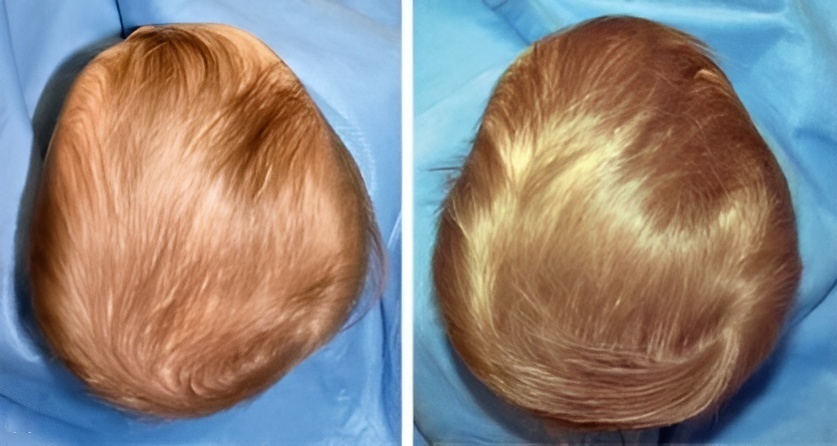
Causing
- Flattening of the back of the head (posterior plagiocephaly)
- Bulging of the opposite side of the skull
- Downward displacement of the ear on the affected side
- Tilting of the skull base
It is one of the least common types of craniosynostosis, but it often requires surgical correction to avoid lasting deformity.
Signs & Symptoms
- Asymmetric flattening of the back of the skull (usually one-sided)
- One ear positioned lower than the other
- Bulging or bossing of the opposite parietal area
- Tilted base of the skull
- Visible bony ridges
- Rarely, increased intracranial pressure or developmental concerns
Diagnosis
Lambdoid synostosis must be distinguished from positional plagiocephaly, which is much more common and usually does not require surgery.
Diagnosis includes :
- Clinical examination of head shape and ear position
- CT scan with 3D reconstruction to confirm suture fusion
- Skull X-rays, if needed
- Developmental assessment to monitor any neurological impact
Why Choose Us
for Lambdoid Synostosis Care?
- Specialized craniofacial and pediatric neurosurgery team
- Advanced imaging and accurate differentiation from positional plagiocephaly
- Customized surgical plans using cutting-edge techniques
- Comprehensive follow-up and developmental monitoring
- Compassionate, family-centered care
Treatment depends on the Type and Severity
Cranial Vault Remodeling Surgery
Surgical correction is usually recommended for moderate to severe cases. The procedure involves
- Reshaping the skull bones at the back of the head
- Restoring symmetry and skull contour
- Preventing long-term cranial or facial imbalance
Surgery is ideally performed between 6 and 12 months of age, when the bones are more flexible, and brain growth is rapid.
Helmet Therapy
In very mild or early-detected cases, helmet therapy may be considered. However, it is not effective for true synostosis where the suture is fused.
Prognosis
With timely surgical treatment, children with lambdoid synostosis typically have excellent cosmetic and developmental outcomes. Early intervention helps prevent asymmetry from worsening and reduces the need for future corrective procedures.