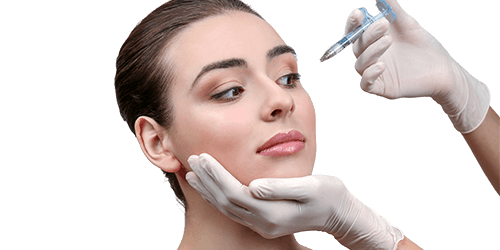
What Are Dermal Fillers?
Dermal fillers are injectable cosmetic products used to add or restore volume beneath the skin.
The current Dr. Rajendra page states that the fillers used are made from hyaluronic acid, a substance naturally present in the body that contributes to skin elasticity and other tissue properties.
Hyaluronic acid fillers can be placed in carefully selected areas to:
- Restore lost facial volume.
- Enhance facial contours.
- Improve the appearance of selected hollows.
- Add volume to the lips.
- Enhance cheek definition.
- Improve chin projection.
- Define the jawline.
- Address selected temple or under-eye volume deficiencies.
The type, amount and placement of filler depend on the patient’s anatomy and treatment goals.
Who Is a Good Candidate for Dermal Fillers?
Dermal fillers may be suitable for adults who want to enhance or restore facial volume without undergoing surgery.
You may be a suitable candidate if you:
- Have mild to moderate signs of facial ageing.
- Have volume loss in selected areas of the face.
- Want more defined cheeks, chin or jawline.
- Want to enhance lip volume.
- Have selected facial hollows.
- Prefer a non-surgical facial enhancement.
- Want relatively little downtime.
- Have realistic expectations about the outcome.
The current Dr. Rajendra page identifies patients seeking a fresher appearance without surgery, those with minimal to moderate signs of ageing and those who prefer to avoid surgical downtime as potential candidates.
A consultation is important because not every facial concern is best treated with fillers.
Which Areas Can Be Treated With Dermal Fillers?
Dermal fillers can be used in several areas of the face, depending on the patient’s individual anatomy.
Common treatment areas include:
- Cheeks
- Lips
- Chin
- Jawline
- Temples
- Under-eye hollows
- Selected areas of the nose for non-surgical contouring
The current Dr. Rajendra website specifically lists the lips, cheeks, temple region, jawline, chin, nose and under-eye hollows among areas where fillers may be used.
Not every patient requires treatment in every area. A customized treatment plan helps determine where filler can provide the most appropriate improvement.
Cheek Fillers
Cheek fillers can be used to restore volume or enhance cheek projection.
Loss of cheek volume can occur with ageing and may contribute to a flatter or less defined midface. Carefully placed filler can restore selected areas of volume and improve the contour of the cheeks.
Cheek filler can also be used for facial contouring in younger patients who want more definition rather than treatment specifically for ageing.
The amount of filler required depends on the patient’s existing cheek structure and desired level of enhancement.
Lip Fillers
Lip fillers are used to add or restore volume to the lips and can also help improve lip contour.
Treatment can be customized according to whether the patient wants:
- Subtle lip enhancement.
- Increased lip volume.
- Improved lip definition.
- Better upper-to-lower lip balance.
- Correction of selected volume deficiencies.
The objective should be to create lips that are proportionate to the rest of the face rather than simply maximizing volume.
For patients specifically seeking surgical lip augmentation, Dr. Rajendra also offers other approaches, including fat transfer, but dermal fillers provide a non-surgical alternative.
Chin Fillers
Chin fillers can be used to provide temporary enhancement of chin projection and contour.
A small amount of carefully placed filler may help improve the appearance of a recessed or less-defined chin and can contribute to better facial profile balance.
Chin enhancement should be planned in relation to the nose, lips, jawline and overall facial proportions.
The current website also identifies fillers as one of the options that can be used for chin augmentation.
Jawline Contouring With Fillers
Jawline fillers can be used to enhance definition along selected areas of the jaw.
This may be considered by patients who want a more defined lower facial contour without undergoing surgical jaw or chin procedures.
The amount and location of filler depend on the patient’s existing bone structure, soft-tissue volume and desired degree of definition.
The goal is to create a balanced jawline rather than simply adding as much volume as possible.
Under-Eye Fillers
The area beneath the eyes can develop hollows or shadows as facial volume changes with age.
Under-eye fillers may be considered in carefully selected patients when volume deficiency contributes to the appearance of the tear-trough or under-eye hollow.
This is a delicate treatment area and requires careful patient selection and precise injection technique. Not every under-eye concern is caused by volume loss; pigmentation, skin quality, puffiness and anatomical features can also contribute to the appearance of dark circles or tired-looking eyes.
Temple Fillers
Loss of volume around the temples can contribute to a hollowed appearance of the upper face.
Temple fillers may be considered when volume deficiency is a significant component of this appearance.
Because the temple is an anatomically sensitive region, treatment requires appropriate knowledge of the local anatomy and careful injection technique.
The current Dr. Rajendra page specifically lists the temple region among areas that can be treated with fillers.
Non-Surgical Facial Contouring With Fillers
One of the advantages of dermal fillers is their ability to provide non-surgical facial contouring.
Depending on the patient’s needs, fillers can be used to enhance:
- Cheek projection.
- Chin definition.
- Jawline contour.
- Lip shape and volume.
- Selected facial hollows.
This allows facial proportions to be refined without undergoing traditional cosmetic surgery.
However, fillers are not a substitute for surgery in every patient. Significant skin laxity, substantial volume loss or structural concerns may require a different treatment approach.
How Do Dermal Fillers Work?
Hyaluronic acid fillers add volume beneath the skin in the area where they are injected.
Depending on the treatment area, this added volume can help restore lost fullness, enhance contours or improve facial proportions.
The result depends on:
- Type of filler.
- Amount used.
- Injection depth.
- Treatment area.
- Individual facial anatomy.
- Skin and soft-tissue characteristics.
The treatment should therefore be customized rather than using the same filler volume or technique for every patient.
What Happens During a Dermal Filler Procedure?
Before treatment, Dr. Rajendra assesses the face and discusses the patient’s concerns and desired outcome.
The treatment areas are then planned according to facial anatomy and the desired correction.
The current Dr. Rajendra page states that a topical anaesthetic ointment may be applied to improve comfort and that filler can be injected using a very fine needle or cannula.
The filler is placed gradually and carefully in the selected areas.
Because there is no surgical incision, dermal filler treatment generally involves considerably less downtime than surgical facial procedures.
Are Dermal Fillers Painful?
Most patients tolerate dermal filler treatment well.
A topical numbing agent may be used before treatment, and the injection technique is designed to minimize discomfort.
Some patients may experience temporary:
- Mild stinging.
- Tenderness.
- Pressure.
- Swelling.
- Bruising at injection sites.
The level of discomfort depends on the treatment area and individual sensitivity.
When Will I See the Results of Dermal Fillers?
One advantage of dermal fillers is that some improvement can usually be appreciated soon after treatment.
However, swelling and minor bruising can temporarily affect the appearance.
The current Dr. Rajendra page states that the full result generally takes around two weeks to assess after the initial swelling has settled.
It is therefore preferable to assess the final appearance after the early swelling has reduced rather than immediately after the injections.
How Long Do Dermal Fillers Last?
Dermal fillers are not permanent.
The current Dr. Rajendra page states that fillers can generally last approximately 6 months to 1 year, depending on individual metabolism.
The actual duration can vary depending on:
- Type of filler.
- Treatment area.
- Amount injected.
- Individual metabolism.
- Degree of movement in the treated area.
- Previous filler treatments.
Some areas may retain filler longer than others.
Maintenance treatment may be considered when the effect gradually decreases.
Dermal Filler Recovery
Dermal filler recovery is generally short compared with surgical facial procedures.
Some patients may experience mild:
- Swelling.
- Bruising.
- Redness.
- Tenderness.
- Small lumps or firmness at injection sites during the initial period.
The current Dr. Rajendra page advises avoiding sun, heat, exercise and alcohol for two days following treatment.
Individual aftercare instructions may vary depending on the treatment area and type of filler used.
Dermal Filler Aftercare
After treatment, patients should follow the specific instructions provided by their doctor.
Depending on the area treated, aftercare may include:
- Avoiding excessive touching or pressure on the treated area.
- Avoiding strenuous exercise immediately after treatment.
- Avoiding excessive heat and sun exposure for the recommended period.
- Following instructions regarding makeup and skincare.
- Reporting unusual or worsening symptoms promptly.
The exact instructions may differ according to the treatment area and individual circumstances.
Are Dermal Fillers Safe?
Dermal fillers are commonly used non-surgical cosmetic treatments, but they are still medical procedures and can have potential complications.
Appropriate product selection, patient assessment, knowledge of facial anatomy and correct injection technique are important for safety.
Temporary effects such as swelling, bruising and tenderness are relatively common. More significant complications are possible, particularly if filler is inadvertently injected into or compresses a blood vessel.
Patients should therefore choose a qualified and appropriately trained medical professional for filler treatment.
Can Dermal Fillers Be Reversed?
One of the advantages of hyaluronic acid dermal fillers is that they can generally be dissolved using an enzyme called hyaluronidase when medically appropriate.
The current Dr. Rajendra page specifically lists reversibility with hyaluronidase as one of the advantages of the fillers used.
However, reversal is a medical procedure in itself and should only be performed when clinically appropriate by a qualified professional.
Dermal Fillers vs Botox
Dermal fillers and Botox are different treatments and work in different ways.
Dermal fillers primarily add or restore volume and can be used for areas such as the cheeks, lips, chin, temples and jawline.
Botox/anti-wrinkle injections temporarily reduce the activity of selected facial muscles and are commonly used for dynamic wrinkles such as forehead lines, frown lines and crow’s feet.
Some patients may benefit from fillers, Botox or a combination of both depending on their individual facial concerns.
The current Dr. Rajendra website presents Botox and fillers as complementary non-surgical facial aesthetic treatments.
Dermal Fillers for Men and Women
Dermal fillers can be used for both men and women.
The treatment should be adapted to individual facial anatomy and aesthetic goals rather than applying the same approach to everyone.
For men, treatment may focus more heavily on maintaining or enhancing structural definition of areas such as the chin and jawline, while other patients may seek lip, cheek or volume restoration.
The objective is always to maintain appropriate facial proportions and a natural appearance.
Dermal Fillers Cost in Bangalore
The cost of dermal fillers in Bangalore varies depending on the patient’s treatment plan.
Factors that can influence the cost include:
- Treatment area.
- Type of filler used.
- Amount of filler required.
- Number of areas treated.
- Degree of volume loss.
- Complexity of facial contouring.
- Whether treatment is performed in one or multiple sessions.
Because filler requirements vary significantly between patients, an exact cost can be discussed after facial assessment.
When considering dermal filler cost in Bangalore, it is important to consider the quality and authenticity of the product, injector expertise, treatment planning and safety rather than selecting treatment based solely on price.
Why Choose Dr. Rajendra for Dermal Fillers in Bangalore?
Dermal filler treatment requires more than simply injecting volume into the face. Appropriate assessment of facial proportions, anatomy, tissue characteristics and muscle movement is important for achieving balanced results.
Dr. Rajendra S. Gujjalanavar provides facial aesthetic treatments including dermal fillers and Botox. His website describes a customized approach in which the face is assessed and filler treatment is planned according to the patient’s goals.
The goal is to restore or enhance facial volume while maintaining natural facial proportions and expression.