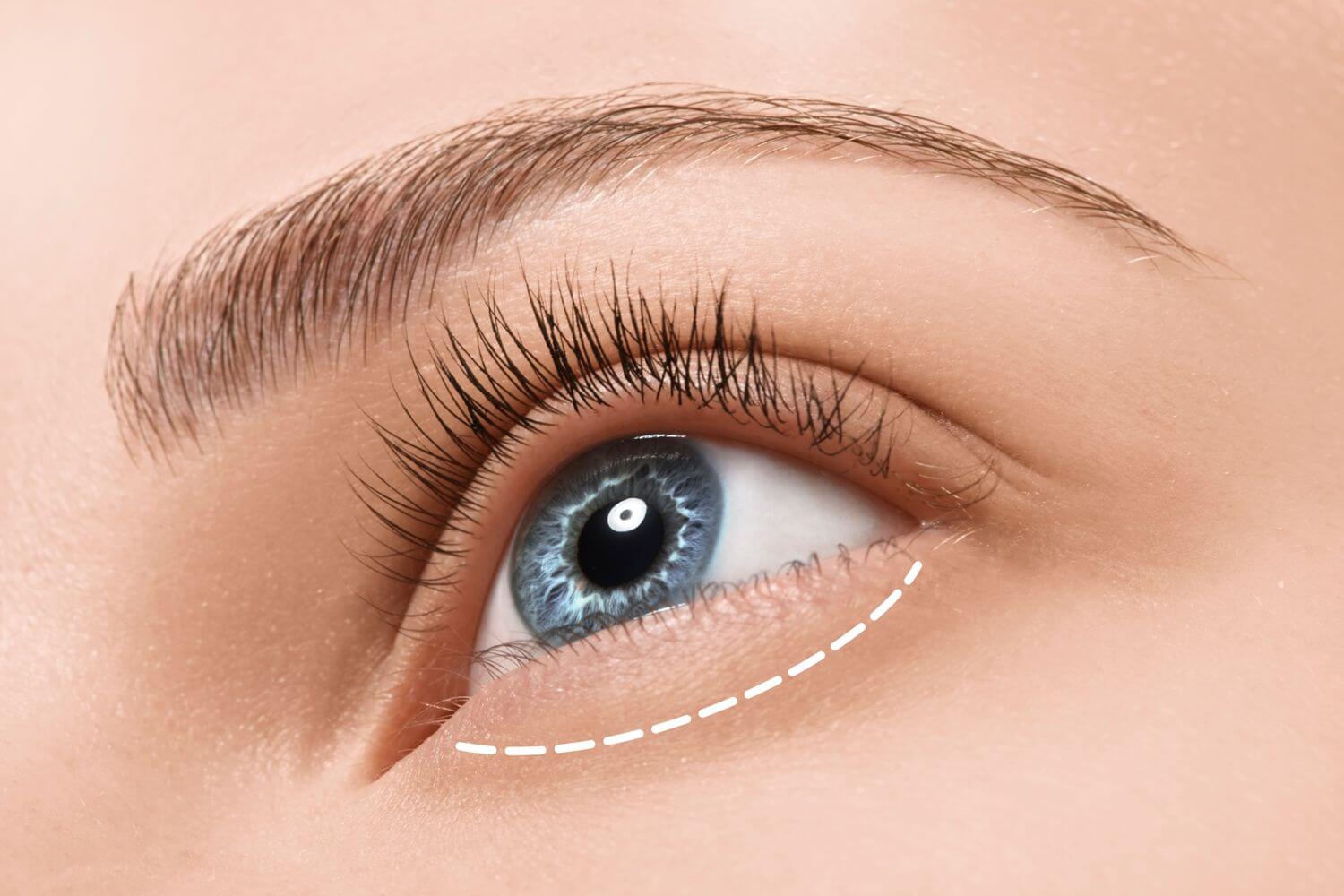
What Is Blepharoplasty?
Blepharoplasty is a surgical procedure performed to improve the appearance and, in selected cases, function of the eyelids.
Depending on the patient’s concerns, surgery may involve:
- Upper blepharoplasty – addresses excess skin and selected tissue of the upper eyelids.
- Lower blepharoplasty – addresses selected concerns such as under-eye bags, excess skin and prominence of fat beneath the eyes.
- Upper and lower blepharoplasty – combines treatment of both areas.
The procedure is individualized because not everyone with puffy or ageing eyelids requires the same type or amount of correction.
Who Is a Good Candidate for Eyelid Surgery?
Blepharoplasty may be considered for adults who are concerned about:
- Droopy or sagging upper eyelid skin.
- Excess skin on the upper eyelids.
- Puffy or tired-looking eyes.
- Under-eye bags.
- Excess skin beneath the eyes.
- Age-related changes around the eyes.
- Eyelids that appear heavy or tired.
- Upper-eyelid skin that interferes with peripheral vision.
- A desire to create a more refreshed appearance around the eyes.
A consultation is important to determine whether eyelid surgery is appropriate and whether the main concern is excess skin, fat, muscle, brow position or another factor.
Upper Eyelid Surgery
Upper blepharoplasty is commonly performed to address excess or loose skin of the upper eyelids.
With ageing, the upper-eyelid skin can become less elastic and may gradually hang over the natural eyelid crease. In some patients, the excess skin can also contribute to a reduction in the upper field of vision.
During upper eyelid surgery, the surgeon makes a carefully planned incision within the natural crease of the upper eyelid. Excess skin and, when appropriate, other tissues are addressed according to the patient’s anatomy.
Because the incision follows the natural eyelid crease, the resulting scar is designed to be as discreet as possible.
Lower Eyelid Surgery
Lower blepharoplasty is performed to address selected concerns involving the lower eyelids and under-eye area.
Common concerns include:
- Under-eye bags.
- Prominent fat beneath the eyes.
- Excess lower-eyelid skin.
- A tired or puffy appearance.
- Certain age-related changes around the lower eyelids.
Depending on the patient’s anatomy, the incision may be placed just below the lower eyelashes or, in selected cases where excess skin does not need to be removed, through the inside of the lower eyelid. The current page describes this latter approach as a transconjunctival incision.
The appropriate approach depends on the amount and type of correction required.
Blepharoplasty for Droopy Eyelids
Droopy eyelids can develop because of excess skin, changes in eyelid tissues, ageing or other anatomical factors.
When excess upper-eyelid skin is the main cause, upper blepharoplasty can remove the appropriate amount of redundant skin and improve the appearance of the eyelid.
However, not every droopy eyelid is caused by excess skin. In some patients, brow position or eyelid muscle function may also contribute. A detailed examination is therefore important before selecting the appropriate procedure.
Blepharoplasty for Under-Eye Bags and Puffy Eyes
Under-eye bags can result from changes in the tissues around the lower eyelids, including prominence or displacement of fat.
Lower eyelid surgery may be considered when prominent fat or excess skin contributes significantly to the appearance of under-eye bags.
The treatment needs to be carefully planned because removing too much tissue can create an unnatural or hollow appearance. The objective is to improve the transition between the lower eyelid and cheek while maintaining natural facial contours.
Benefits of Blepharoplasty Surgery
A carefully planned eyelid surgery can help:
- Reduce excess upper-eyelid skin.
- Improve the appearance of droopy eyelids.
- Reduce the appearance of selected under-eye bags.
- Improve puffiness around the eyes.
- Create a more refreshed facial appearance.
- Improve eyelid symmetry in selected patients.
- Address certain functional vision problems caused by excess upper-eyelid skin.
- Restore a more youthful appearance around the eyes.
The aim is not to completely change the shape of the eyes. Instead, blepharoplasty focuses on improving excess tissue and age-related changes while maintaining the natural character of the eyes.
How Is Blepharoplasty Surgery Performed?
Before surgery, the surgeon examines the eyelids, surrounding tissues, skin quality and facial proportions. The type and extent of correction are then planned.
For upper eyelid surgery, the incision is generally placed within the natural crease of the upper eyelid. Excess skin and selected tissue are removed or adjusted according to the patient’s needs.
For lower eyelid surgery, the incision may be placed beneath the lower eyelashes when skin removal is required. In selected patients, a transconjunctival approach through the inside of the lower eyelid may be used when appropriate.
The incisions are carefully closed after the planned correction has been completed.
What Type of Anaesthesia Is Used for Blepharoplasty?
The type of anaesthesia used for blepharoplasty depends on factors such as the type of eyelid surgery, extent of correction, patient’s medical condition and surgeon/anesthesia assessment.
Depending on the individual case, eyelid surgery may be performed using local anaesthesia, local anaesthesia with sedation, or general anaesthesia.
The appropriate option will be discussed during the preoperative consultation.
Blepharoplasty Surgery Recovery
Blepharoplasty recovery varies from person to person and depends on whether upper eyelid, lower eyelid or combined surgery is performed.
Swelling and bruising are common during the initial healing period. The current Dr. Rajendra page states that most swelling reduces within approximately one week, while the final result may become clearer after around six weeks as swelling continues to resolve.
During recovery, patients may experience:
- Swelling around the eyes.
- Bruising.
- Mild tightness or discomfort.
- Temporary dryness or irritation.
- Temporary changes in sensation.
- Mild difficulty with normal activities during the early healing period.
The surgeon will provide individual instructions regarding eye care, medications, activity and follow-up.
When Can I Return to Normal Activities After Blepharoplasty?
The timing depends on the extent of surgery and individual recovery.
The current page states that patients may return to normal activities from the next day, while strenuous activities such as jogging, gym workouts and sports should be avoided for approximately two weeks.
However, recovery varies, and patients should follow their surgeon’s specific instructions rather than using a fixed timeline for everyone.
When Will I See the Final Results?
The improvement in the eyelid appearance may be visible soon after surgery, but swelling can temporarily affect the result.
As the swelling gradually decreases, the eyelid contours become more defined. The current page notes that final results can generally be appreciated at around six weeks, when most of the swelling has subsided.
Scar maturation and subtle changes can continue beyond the initial recovery period.
Does Blepharoplasty Leave Scars?
Blepharoplasty involves incisions, so some scarring is expected.
For upper eyelid surgery, the incision is generally placed within the natural eyelid crease. For lower eyelid surgery, the incision may be placed below the eyelashes or inside the lower eyelid depending on the technique.
These locations are selected to make scars as discreet as possible.
Individual scar appearance varies according to skin type, healing ability, surgical technique and postoperative care.
Is Blepharoplasty Permanent?
Blepharoplasty provides a long-lasting improvement by removing or modifying excess tissue.
However, it does not stop the natural ageing process. Skin elasticity, facial tissues and the appearance of the eyelids can continue to change over time.
The procedure can therefore provide long-term rejuvenation, but it should not be considered a way to permanently prevent future ageing around the eyes.
What Are the Risks of Blepharoplasty?
Blepharoplasty is generally considered a safe procedure when appropriately planned and performed, but complications are possible.
Potential risks include:
- Bleeding or hematoma.
- Infection.
- Dry eyes.
- Temporary or persistent changes in sensation.
- Difficulty completely closing the eyes.
- Eyelid asymmetry.
- Changes in eyelid position.
- Scarring.
- Irritation or discomfort.
- Unsatisfactory aesthetic results.
- Need for revision surgery in selected cases.
The current Dr. Rajendra page specifically lists bleeding, infection, eye dryness, difficulty closing the eyes, outward rolling of the eyelid and scarring among possible complications.
A detailed assessment before surgery helps identify individual risks and determine whether blepharoplasty is appropriate.
Can Blepharoplasty Improve Vision?
In selected patients, upper eyelid surgery may improve the upper field of vision when excess eyelid skin hangs over and obstructs part of the visual field.
However, blepharoplasty is not a treatment for every type of vision problem. Visual symptoms may have many different causes, so patients with functional concerns should undergo an appropriate eye and eyelid assessment.
The current page specifically identifies improvement in vision as a possible functional benefit when sagging upper eyelids interfere with sight.
Blepharoplasty for Men and Women
Blepharoplasty can be performed in both men and women.
The surgical plan should be individualized because male and female eyelid anatomy and aesthetic preferences can differ. The objective is to preserve the patient’s natural facial characteristics while addressing the specific concern.
Blepharoplasty Surgery Cost in Bangalore
The cost of blepharoplasty surgery in Bangalore varies depending on the type and extent of surgery.
Factors that may influence the cost include:
- Upper, lower or combined eyelid surgery.
- Complexity of the procedure.
- Amount of excess skin or tissue requiring correction.
- Anaesthesia.
- Surgical facility charges.
- Surgeon and operating-room charges.
- Follow-up and postoperative care.
Because each patient’s eyelid anatomy and treatment requirements are different, an exact cost can be discussed after consultation and assessment.
When considering blepharoplasty cost in Bangalore, it is important to consider surgical expertise, safety, treatment planning and expected results rather than choosing treatment based solely on price.
Why Choose Dr. Rajendra for Blepharoplasty Surgery in Bangalore?
Blepharoplasty requires precise knowledge of eyelid anatomy because even a small change in the amount or position of tissue can affect the appearance and function of the eyes.
Dr. Rajendra S. Gujjalanavar is a plastic, cosmetic and craniofacial surgeon with qualifications including DNB in General Surgery, M.Ch in Plastic Surgery, DNB in Plastic Surgery and fellowships in cosmetic, microsurgery, lymphedema and craniofacial surgery. His listed area of expertise includes blepharoplasty.
His approach to facial aesthetic procedures emphasizes individualized treatment planning and natural-looking results.
The goal of blepharoplasty is to create a refreshed and natural appearance while preserving the normal function and character of the eyes.