
Craniosynostosis : A Complete Overview
Craniosynostosis : A Complete Overview
What is Craniosynostosis?
Craniosynostosis is a birth defect in which one or more of the sutures in a baby’s skull close too early, before the brain has fully developed. These sutures are flexible joints that allow the skull to expand as the baby’s brain grows. When they close prematurely, it can result in an abnormally shaped head and, in some cases, increased pressure on the brain.
What Causes Craniosynostosis?
Craniosynostosis can be :
-
Isolated (nonsyndromic)
Occurs on its own without other health issues. This is the most common type.
-
Syndromic
Linked to genetic syndromes such as Apert, Crouzon, or Pfeiffer syndrome. These forms often affect multiple sutures and may involve other parts of the body like hands and feet.
Risk Factors
-
Genetic mutations
-
Family history
-
Maternal smoking or certain medications during pregnancy
-
Advanced paternal age
Diagnosis
Diagnosis usually involves :
-
Physical examination
-
Measurement of head circumference and shape
-
Imaging tests such as :
- CT scan: Best for seeing fused sutures
- X-ray: May show early fusion
- 3D imaging: For surgical planning
-
Advanced paternal age
Types of Craniosynostosis
Each type is based on which suture(s) close too early :
-
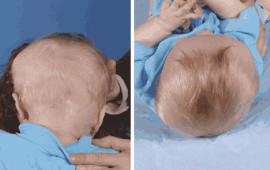
Sagittal Synostosis (Scaphocephaly)
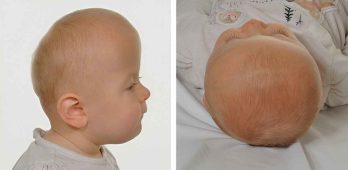
Most common type. Results in a long, narrow head shape.
-
Coronal Synostosis
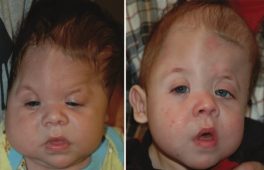
One or both coronal sutures fuse early. Causes forehead flattening and asymmetry (if one-sided).
-
Metopic Synostosis (Trigonocephaly)
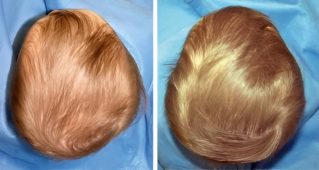
Closure of the metopic suture causes a triangular forehead.
-
Lambdoid Synostosis
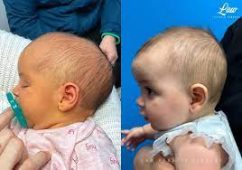
Rare. Closure of the lambdoid suture at the back of the skull causes flattening and tilting.
-
Multiple Sutures Involved
Can lead to complex skull deformities and higher risk of raised intracranial pressure.
Signs and Symptoms
-
Abnormally shaped head
-
Uneven forehead or brow
-
Bulging or misshapen fontanelle (soft spot)
-
Slow or no growth of the head
-
Developmental delays (in severe cases)
-
Visible ridges where sutures have closed
-
Increased intracranial pressure: vomiting, irritability, sleepiness, or seizures in rare cases
Treatment depends on the Type and Severity
Surgery
-
The mainstay treatment for moderate to severe cases.
-
Goal
Allow normal brain growth, relieve pressure (if needed), and improve skull appearance.
-
Types of surgery:
- Open cranial vault reconstruction (traditional)
- Endoscopic surgery (less invasive, for infants under 6 months)
-
Surgery is ideally done between 3–12 months of age for best results.
Monitoring Only
-
In very mild, nonsymptomatic cases.
Helmet Therapy
-
In mild cases or post-surgery.
-
Helps mold the skull as the baby grow
Prognosis
-
With timely diagnosis and proper treatment, most children with craniosynostosis live healthy, normal lives. Early surgical correction usually results in excellent cosmetic and functional outcomes. Syndromic cases may require multiple surgeries and long-term care.
Non-Syndromic Craniosynostosis Categories

FREQUENTLY ASKED QUESTIONS
FAQs
Yes, if left untreated, severe cases can cause increased pressure on the brain, potentially affecting development.
It’s not typically painful, but complications can cause discomfort if pressure builds up inside the skull.
In some cases, it may be detected via prenatal ultrasound, especially in syndromic forms, but it’s more commonly diagnosed after birth.
It can be. Syndromic craniosynostosis is linked to genetic conditions, but most nonsyndromic cases occur sporadically.
Untreated craniosynostosis may result in permanent skull deformity, increased intracranial pressure, vision problems, or developmental delays.
Craniosynostosis is a manageable condition when identified early. If your child has an unusual head shape or you notice other symptoms, consult a pediatrician or craniofacial specialist promptly. Early intervention not only improves appearance but also prevents possible complications, ensuring a healthy future for your child.
FAQs About Craniosynostosis
Yes, if left untreated, severe cases can cause increased pressure on the brain, potentially affecting development.
It’s not typically painful, but complications can cause discomfort if pressure builds up inside the skull.
In some cases, it may be detected via prenatal ultrasound, especially in syndromic forms, but it’s more commonly diagnosed after birth.
It can be. Syndromic craniosynostosis is linked to genetic conditions, but most nonsyndromic cases occur sporadically.
Untreated craniosynostosis may result in permanent skull deformity, increased intracranial pressure, vision problems, or developmental delays.
Craniosynostosis is a manageable condition when identified early. If your child has an unusual head shape or you notice other symptoms, consult a pediatrician or craniofacial specialist promptly. Early intervention not only improves appearance but also prevents possible complications, ensuring a healthy future for your child.